
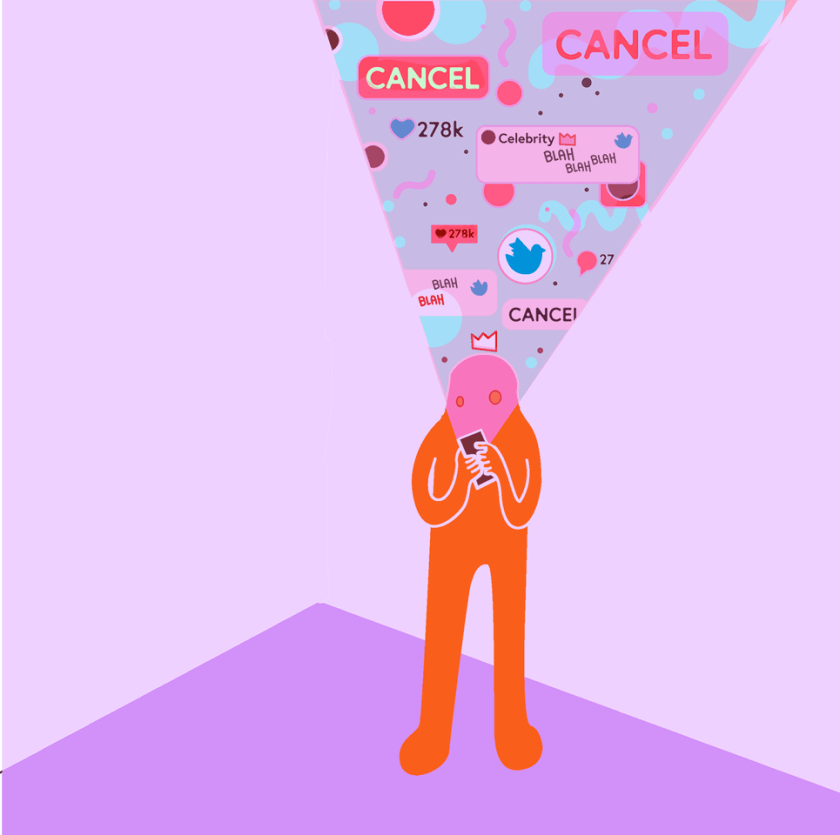
In a world where celebrity Instagrams are at everyone’s fingertips, “social media influencers” are all the rage and kids have decided that the answer to “what do you want to be when you grow up?” is “a YouTuber,” it can be easy to be quick to judge the rich and famous for their mistakes. That being said, young people within our society have developed a certain “cancel culture” where, if the general populace deems a well-known internet personality or celebrity to be problematic, they are shunned and decidedly cancelled.
Take Logan Paul, for instance. Admittedly, even typing his name out sends shivers down my spine after the Suicide Forest incident that everyone wishes they could forget. People analyzed Paul’s apology video for body language indicators and tweeted with #LoganPaulIsOverParty. People denounced him on Twitter, unfollowed him on Instagram and unsubscribed from his YouTube channel all in the same breath.
Celebrities, social media influencers and YouTubers are packaged as commodities to be sold rather than people and society has decided it has the right to be won over or it won’t buy. One mistake and the Jake Paul’s of the world are sent packing, deemed cancelled and careers nearly ruined. It reminds me of Roman emperors putting innocent people in the ring with lions or gladiators, deciding if they are to live or die. When did society start to think it has this power and right to destroy?
Besides, it doesn’t do any good.
“But cancelling people is the only way to make them learn,” I hear Buzzfeed proclaiming from its high rise windows. Is it really?
Let’s go back to Logan. In the days after his video was released, Paul ventured to apologize twice: once, using the stock iPhone Notes app, then again, via a monetized YouTube video. “I’ve made a severe and continuous lapse in my judgment, and I don’t expect to be forgiven,” Paul said. “I’m simply here to apologize.”
Though #LoganPaulIsOverParty continued to trend, his career wasn’t over, naturally. He continued to make videos. He continued to make millions.
The most obvious problem with cancel culture is that it rarely has any tangible or meaningful effect on the lives and comfortability of the canceled.
The notion of collective cancellation is often more hopeful than it is plausible; as a democratic aspiration, it’s an exercise control, a reclamation of power for the viewer/follower/fan. To withdraw from supporting someone whose actions and behaviors are now inconsistent with one’s values can feel like a radical boycott.
Yet to succeed in the midst of cancellation is less of an exception to the rule than it is the rule itself.
That video? According to Huffington Post, it gained some 6.3 million views in 24 hours. Tubular Insights, a video marketing company, says vlog content videos only get 2,354 views per video, on average. If anything, Logan Paul’s views went up while people called for him to go down.
Cancelled culture is nothing more than a pipe dream, a misinformed society that assumes it has power over the course of those YouTube commodities they treat like gods one minute and nothing the next. But it doesn’t do any good. Logan Paul’s subscriber count continues to rise along with his bank account. And we wait for the next mistake.

 College Lifestyle